



As you are approaching the end of your first year at UBC, you might wonder: what comes after CAP? You may wish to find courses that, like CAP, bring different disciplines and viewpoints into conversation.
The Faculty of Arts offers many exciting interdisciplinary courses for you to take. These courses span a wide variety of interdisciplinary programs, including but not limited to African Studies, Law and Society, Medieval Studies, and Program in the Study of Religion. Please see below for a selection of the courses offered for the 2026 Summer and 2026 Winter Sessions!
African Studies Program
 Cultural, historical, and geographical issues of African Studies (AFST_V 250)
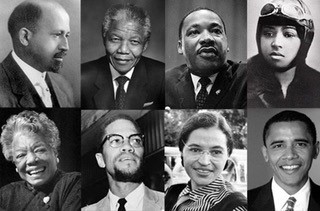
This course provides an ethnographic and ethnological survey of Sub-Saharan African peoples and culture. It highlights the change and the resistance to change in the period since the age of exploration through the Berlin Conference of 1885, which redrew the map of Africa to serve the needs of European nations, but it also gives an in-depth look at Africa’s geography including its ecology as well as its ‘traditional’ cultures.
Law and Society Program
Introduction to Law and Society (LASO_V 204)
Ideas, concepts, and frameworks for thinking about the nature of law and legal processes in both Canadian and global contexts.
Medieval Studies Program
Introduction to Global Medieval and Early Modern Studies (MDVL_V 200)
Introduction to interdisciplinary practices and global approaches to the study of the medieval and early modern periods (500- 1800 CE), integrating history, literature, and the arts; specific topics and case studies may vary from year to year. Credit will only be granted for one of MDVL_V 200 or MDVL_V 210.
Program in the Study of Religion
Introduction to the Study of Religion (RGST_V 200)

This course takes a comparative, cross-cultural, and interdisciplinary approach to humans’ engagement with the sacred. It examines religions as complex systems that share certain fundamental common features. The primary focus in this course is not theology, but practice: what people do and why they do it. Additionally, the class examines how spirituality fits into the broader context of everyday human life. While we will examine a wide variety of religions, this course is not designed to study each religion in depth.